For New York LMHCs

Clinical Supervision for the LMHC Diagnostic Privilege in New York

Supervision toward the New York diagnostic privilege, with a supervisor who holds it.

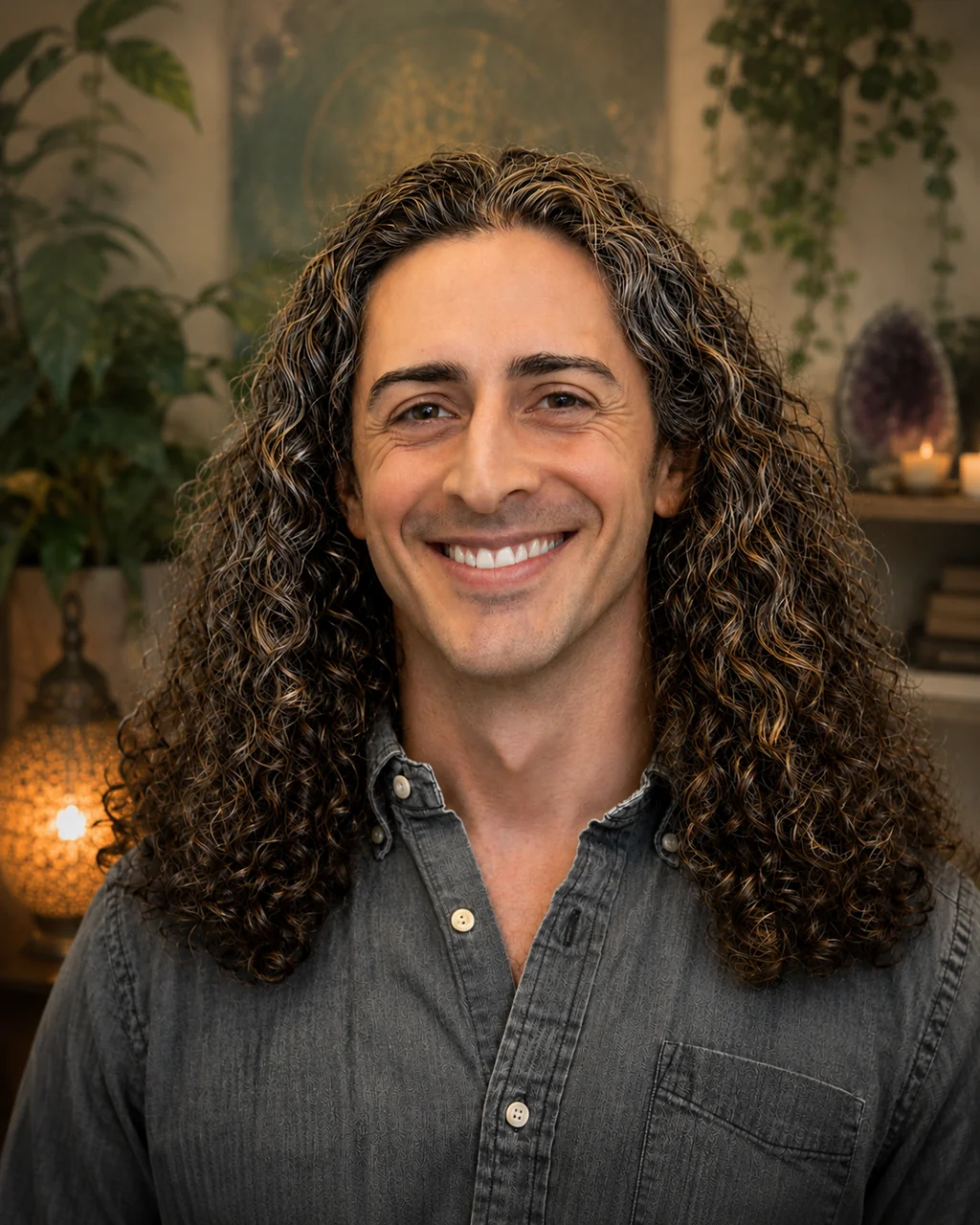
Cameron Eshgh, LMHC-D, NCC, provides clinical supervision for New York licensed mental health counselors accruing supervised experience toward the diagnostic privilege. Cameron holds the New York diagnostic privilege himself as an LMHC-D, which places him within the category of professionals the New York State Education Department recognizes as qualified to supervise diagnostic privilege experience.

The diagnostic privilege is what authorizes an LMHC in New York to diagnose and to develop assessment-based treatment plans. Since June 24, 2024, it has been a separate authorization from the license itself, with its own education, supervised experience, and application requirements.

This page explains how the New York diagnostic privilege works, who is qualified to supervise the experience it requires, what the 2,000-hour and three-year attestation pathways involve, why the June 24, 2027 deadline arrives sooner than it appears, and how supervision with Cameron fits. The New York State Education Department makes all final eligibility determinations.

The Short Version

  • • Since June 24, 2024, a New York LMHC needs the diagnostic privilege in order to diagnose and to develop assessment-based treatment plans.
  • • The privilege is applied for separately from the LMHC license, on its own NYSED forms, with a $175 application fee.
  • • The standard pathway requires at least 2,000 hours of supervised, direct client contact that includes diagnosis, psychotherapy, and the development of assessment-based treatment plans.
  • • Supervision must average one hour per week, or two hours every other week, of face-to-face individual or group supervision.
  • • Qualified supervisors are professionals authorized to diagnose: LCSWs, licensed psychologists, psychiatrists, and LMHCs, LMFTs, and licensed psychoanalysts who hold the diagnostic privilege themselves.
  • • LMHCs licensed in New York before June 24, 2024 have an alternative attestation pathway based on three years of qualifying experience, and must apply and meet all requirements by June 24, 2027.
  • • NYSED specifies acceptable settings for this experience and states that the setting shall not be a private practice owned or operated by the applicant.
  • • Cameron Eshgh holds the New York diagnostic privilege as an LMHC-D and supervises New York clinicians building this experience.

What the New York LMHC Diagnostic Privilege Is

For most of the history of the profession in New York, the scope of practice for licensed mental health counselors did not clearly include diagnosis. Counselors assessed, formulated, and treated, but the word diagnosis sat outside the statute, which created years of ambiguity for clinicians, employers, and payers.

New York resolved that ambiguity by creating an explicit diagnostic privilege for certain mental health practitioners, added to Article 163 of the Education Law and effective June 24, 2024. The privilege authorizes diagnosis and the development of assessment-based treatment plans. It is not automatic, and it is not granted with the license. It is a separate authorization, applied for separately, with its own education and supervised experience requirements, its own application, and its own renewal.

That structure has a practical consequence that some clinicians discover late: holding a current New York LMHC license is no longer sufficient on its own for the diagnostic work that most clinical settings assume. NYSED's guidance is direct on the point, stating that a license holder who does not renew the privilege "may not provide diagnosis, psychotherapy, and assessment-based treatment planning," and that practicing beyond the authorization can be treated as professional misconduct.

The privilege also applies to licensed marriage and family therapists and licensed psychoanalysts, on a parallel structure. This page addresses the mental health counseling pathway specifically, because that is where Cameron practices, supervises, and holds the privilege himself.

Two Pathways to the Diagnostic Privilege

New York built two routes to the privilege. Which one applies to you depends almost entirely on one date: whether you were licensed as an LMHC in New York before June 24, 2024.

The 2,000-Hour Pathway

At least 2,000 hours of supervised, direct client contact that includes, but is not limited to, diagnosis, psychotherapy, and the development of assessment-based treatment plans. During that experience the supervisor provides an average of one hour per week, or two hours every other week, of face-to-face individual or group supervision, and reviews the supervisee's diagnosis and treatment of each client under general supervision. The experience is certified to NYSED by the supervisor who provided it, on Form 4D.

The Three-Year Attestation Pathway

Available to LMHCs licensed in New York before June 24, 2024. Instead of counting hours, a supervisor attests that the applicant has at least three years of experience engaged in direct client contact that includes diagnosis, psychotherapy, and the development of assessment-based treatment plans. NYSED states that practitioners using this route must submit the application and meet all requirements by June 24, 2027.

Both routes share the same education standard, and both require an attestation from someone who actually supervised the work. That second point is the one most worth internalizing early: a supervisor can certify only the supervision they personally provided. Experience that was never supervised by a qualified supervisor generally cannot be retroactively vouched for by anyone.

Requirements at a Glance

Effective Date
June 24, 2024, under Article 163 of the New York Education Law.
Who Applies
Licensed mental health counselors holding a current New York license and valid registration.
Education
A 60-semester-hour master's degree or higher in mental health counseling, including at least 12 semester hours of clinical coursework.
Clinical Coursework Content
Diagnosis, assessment using classification systems, treatment plan development, and interventions with diverse populations.
Supervised Experience
At least 2,000 hours of supervised, direct client contact including diagnosis, psychotherapy, and the development of assessment-based treatment plans.
Supervision Cadence
An average of one hour per week, or two hours every other week, of face-to-face individual or group supervision.
Setting
NYSED specifies acceptable settings and states that the setting shall not be a private practice owned or operated by the applicant.
Application Fee
$175, non-refundable.
Forms
Form 1D to apply, Form 2D to certify education, Form 4D to certify supervised experience, Form 5D for a diagnostic limited permit, and Form 5CS-D for supervisor certification on that permit.
Deadline for Earlier Licensees
LMHCs licensed before June 24, 2024 must submit the application and meet all requirements by June 24, 2027.

These details reflect requirements published by the New York State Education Department Office of the Professions as of August 20, 2026. Requirements change. Verify against the primary sources linked at the bottom of this page before making decisions about your licensure.
Who Can Supervise Diagnostic Privilege Experience in New York

Experience toward the diagnostic privilege must be supervised by a professional who is themselves authorized to diagnose. NYSED identifies the qualifying categories as:

  • • Licensed clinical social workers licensed in New York, or the equivalent
  • • Licensed psychologists
  • • Psychiatrists
  • • Licensed mental health counselors, licensed marriage and family therapists, and licensed psychoanalysts who hold the diagnostic privilege themselves

That fourth category was created by the same 2024 change that created the privilege, and it is why the supervisor question has become a real bottleneck for New York counselors. LCSWs, psychologists, and psychiatrists have long been able to supervise diagnostic work, but many mental health counselors would rather learn diagnosis inside their own professional lineage, from a supervisor who was trained in counseling, thinks in counseling frameworks, and understands the specific scope questions LMHCs face.

Cameron Eshgh holds the New York diagnostic privilege as an LMHC-D, New York license D012254, verifiable through the NYSED license verification search. He is also a National Certified Counselor and a Certified Complex Trauma Professional, and he is licensed as a mental health counselor in New Jersey, Florida, Massachusetts, and Vermont. For New York diagnostic privilege purposes, the relevant credential is the New York privilege itself.

The Diagnostic Privilege Limited Permit

A diagnostic privilege limited permit authorizes supervised practice while a clinician accrues the direct client contact hours the privilege requires. NYSED states that the permit is valid for two years and may be renewed for no more than two one-year periods on application with a $70 fee, which places a practical outer bound of four years on permitted accrual. A supervisor may oversee no more than five permit holders at one time.

The permit is applied for on Form 5D, with the supervising professional certifying on Form 5CS-D. Legislation effective June 18, 2025 extended the provisions authorizing these permits through June 24, 2027, aligning them with the deadline that applies to practitioners licensed before June 24, 2024.

Whether you need a permit, and when, depends on your license status and your setting. It is worth resolving before you begin accruing hours rather than after, because permits are not retroactive and hours accrued outside a valid arrangement may not count.

Why the Timeline Matters More Than It Looks

June 24, 2027 sounds distant. The arithmetic of 2,000 supervised hours is what makes it not so.

Direct client contact hours accumulate at the pace of an actual caseload, not a calendar. A rough sense of the arc, before accounting for time off, holidays, cancellations, and the weeks when clinical life simply does not cooperate:

  • • At roughly 25 direct client hours per week, 2,000 hours takes on the order of 80 weeks, or about a year and a half
  • • At roughly 15 direct client hours per week, on the order of 133 weeks, or about two and a half years
  • • At roughly 10 direct client hours per week, on the order of 200 weeks, or close to four years

Those figures are illustrative, not a schedule, and they assume every hour qualifies and is properly supervised and documented. The point is structural: for a clinician carrying a part-time or building caseload, the hours pathway is measured in years. Clinicians who wait until a deadline is visible on the horizon often find that the horizon was already behind them.

The three-year attestation pathway is meaningfully faster for those who qualify for it, which is precisely why the June 24, 2027 cutoff matters. It is the date after which that route is no longer available.

What Diagnostic Privilege Supervision With Cameron Involves

Regulatory compliance is the floor, not the purpose. The requirement exists because diagnosis is a consequential act: it shapes treatment, access, records, insurance, custody, disability, and how a person comes to understand themselves. Supervision that only counts hours has missed the point of the hours.

Supervision toward the diagnostic privilege with Cameron attends to the documentation the privilege requires and to the clinical judgment it is meant to protect.

  • • Differential diagnosis, and the discipline of holding a formulation loosely while the picture clarifies
  • • Working with the DSM-5-TR as a classification system rather than an explanation of a person
  • • Distinguishing trauma responses, dissociation, personality structure, mood disorders, and psychotic-spectrum presentations
  • • Assessment-based treatment planning that follows from the formulation instead of decorating it
  • • Cultural, spiritual, religious, and contextual factors that change what a symptom means
  • • Substance use, co-occurring presentations, and serious mental illness
  • • Risk assessment, documentation, and the records a diagnosis has to be able to stand behind
  • • Scope of practice, and knowing when a medical evaluation or a higher level of care is indicated
  • • The ethics of diagnostic language with the client in the room
  • • Countertransference and diagnostic bias, including how a clinician's own material shapes what they see

Cameron's clinical background includes relational and depth-oriented psychotherapy, complex trauma, anxiety, burnout and perfectionism, attachment wounds, identity and meaning, substance use recovery, serious mental illness, psychosis, and co-occurring concerns. His supervision is slower and more reflective than a case-review checklist, attentive to what is happening in the clinician and not only the client, and respectful of a developing clinical voice rather than imposing a single model. For clinicians whose work touches spiritual integration, religious trauma, or psychedelic integration as psychotherapy after an experience, that material is welcome here rather than bracketed out.

Supervision is provided online by appointment, at the cadence the privilege requires. It is a professional service for clinicians, not psychotherapy, and it is not billable to insurance. Fees are private pay and are reviewed during the inquiry process. Broader clinical supervision, consultation, and mentorship is available separately for clinicians whose needs are not tied to the New York diagnostic privilege.

What Cameron Can and Cannot Do Here

Clarity now prevents a difficult conversation later.

  • • Cameron holds the New York diagnostic privilege, which places him within a category NYSED recognizes as qualified to supervise this experience. He does not decide whether your particular arrangement qualifies. NYSED does.
  • • He can certify supervision he has actually provided. He cannot certify hours supervised by someone else, and he cannot attest to a three-year history of experience he did not supervise.
  • • NYSED states that the setting for this experience shall not be a private practice owned or operated by the applicant. If you own or operate the practice where you see clients, that setting is a threshold problem to resolve before supervision is arranged, not after.
  • • Cameron is not your attorney and this page is not legal advice. Licensure questions with real consequences deserve confirmation from the Office of the Professions, and sometimes from counsel.
  • • Availability is limited, and a supervisor may oversee no more than five diagnostic limited permit holders at one time.
  • • Supervision is not therapy for the supervisee, and Cameron does not provide psychotherapy to clinicians he supervises.

Who This Is For

  • • New York LMHCs licensed before June 24, 2024 who need to resolve the privilege before the June 24, 2027 deadline
  • • LMHCs licensed on or after June 24, 2024 beginning the 2,000-hour pathway
  • • Clinicians holding or applying for a diagnostic privilege limited permit who need a qualified supervisor
  • • Counselors who would rather learn diagnosis from within the counseling profession than outside it
  • • Clinicians whose employer requires diagnostic authorization and whose current supervision does not qualify
  • • Newly licensed counselors who want diagnostic supervision that is also genuine clinical development
  • • Clinicians drawn to relational, depth-oriented, trauma-informed, or spiritually integrative work
  • • Counselors who have started this process, stalled, and want to finish it properly

Diagnostic Privilege Supervision Inquiry

The next step is a brief inquiry to clarify your license date, your setting, your permit status, your hours to date, and your timeline. On the form, select New York LMHC diagnostic privilege supervision so your inquiry reaches the right place.

Inquire About Diagnostic Privilege Supervision
Quick Answers

New York LMHC Diagnostic Privilege Questions

What is the LMHC diagnostic privilege in New York?

The diagnostic privilege is a separate authorization from the New York State Education Department, added to Article 163 of the Education Law and effective June 24, 2024, that permits a licensed mental health counselor to diagnose and to develop assessment-based treatment plans. It is applied for separately from the LMHC license itself, and it carries its own education, supervised experience, application, and renewal requirements. Cameron Eshgh holds the New York diagnostic privilege as an LMHC-D.

Who can supervise diagnostic privilege hours in New York?

Supervision for diagnostic privilege experience must come from a professional authorized to diagnose. NYSED identifies licensed clinical social workers, licensed psychologists, and psychiatrists, and, as of June 24, 2024, licensed mental health counselors, licensed marriage and family therapists, and licensed psychoanalysts who hold the diagnostic privilege themselves. Cameron Eshgh holds the New York diagnostic privilege as an LMHC-D, which places him within that last category.

Can Cameron supervise my New York diagnostic privilege hours?

Often, yes, and it depends on facts specific to you. Cameron holds the New York diagnostic privilege, so he falls within the category of professionals NYSED recognizes as qualified supervisors. Whether your particular arrangement satisfies NYSED also depends on your license status, your setting, and your supervision cadence. That is clarified during the inquiry process rather than assumed in advance, and NYSED makes all final determinations.

How many supervised hours does the New York diagnostic privilege require?

The standard pathway requires at least 2,000 hours of supervised, direct client contact that includes, but is not limited to, diagnosis, psychotherapy, and the development of assessment-based treatment plans. During that experience, the supervisor provides an average of one hour per week, or two hours every other week, of face-to-face individual or group supervision, and reviews the supervisee's diagnosis and treatment of each client under general supervision.

What is the June 24, 2027 diagnostic privilege deadline?

Licensed mental health counselors licensed in New York before June 24, 2024 have an alternative pathway based on a supervisor attestation of at least three years of direct client contact that includes diagnosis, psychotherapy, and the development of assessment-based treatment plans. NYSED states that these practitioners must submit the application and meet all requirements by June 24, 2027. A law effective June 18, 2025 extended related limited permit provisions to the same date.

Can I accrue diagnostic privilege hours in my own private practice?

No. NYSED specifies acceptable settings for diagnostic privilege experience and states that the setting shall not be a private practice owned or operated by the applicant. If you own or operate the practice where you see clients, that setting will not satisfy the experience requirement, which makes it one of the first things worth confirming before arranging supervision.

What is the diagnostic privilege limited permit?

The diagnostic privilege limited permit authorizes supervised practice while a licensed mental health counselor accrues the 2,000 hours of direct client contact required for the privilege. NYSED states the permit is valid for two years and may be renewed for no more than two one-year periods, and that a supervisor may oversee no more than five permit holders at one time. It is applied for on Form 5D, with supervisor certification on Form 5CS-D.

Can Cameron sign my Form 4D?

Cameron can certify only the supervision he has actually provided. Form 4D is completed by the supervisor who supervised the experience being claimed, so Cameron can certify the hours he supervises with you. He cannot certify hours supervised by someone else, and he cannot attest to a three-year history of experience he did not supervise.

How is diagnostic privilege supervision different from limited permit supervision toward LMHC licensure?

Supervision toward initial LMHC licensure is about qualifying for the license itself. Diagnostic privilege supervision is about a separate authorization layered on top of the license, and its experience must specifically include diagnosis, psychotherapy, and the development of assessment-based treatment plans, certified on its own NYSED form by a supervisor authorized to diagnose. Some clinicians pursue both, and the requirements are documented separately.

Is diagnostic privilege supervision with Cameron online, and what does it cost?

Supervision is provided online by appointment. It is private pay only, and fees, cadence, and the supervision agreement are reviewed during the inquiry process. Supervision is a professional service for clinicians, not psychotherapy, and it is not billable to insurance.

Does this page constitute legal advice about New York licensure?

No. This page is educational information about publicly published New York State Education Department requirements as of August 20, 2026. It is not legal advice, and it is not a determination of your eligibility. Requirements change, individual facts matter, and the Office of the Professions is the authority on your specific situation.

Verify With NYSED

Everything on this page is drawn from requirements published by the New York State Education Department Office of the Professions, which is the authority on your eligibility. Licensure rules change, and individual facts matter. Read the primary sources.

Last reviewed August 20, 2026 by Cameron Eshgh, LMHC-D, NCC. This page is educational information about New York licensure requirements. It is not legal advice, it is not a determination of your eligibility, and it is not psychotherapy or a clinical service. See the website disclaimer for full terms.

Cameron Eshgh, LMHC-D, NCC

Supervisor

Cameron Eshgh, LMHC-D, NCC

New York LMHC-D D012254. NPI 1336731413.

Page FocusClinical supervision for New York LMHCs accruing experience toward the diagnostic privilege.
FormatOnline supervision by appointment, at the cadence the privilege requires.
Supervisor QualificationCameron holds the New York diagnostic privilege as an LMHC-D; NYSED makes all eligibility determinations.
FeesPrivate-pay only; supervision fees are reviewed during the inquiry process.