Depth-oriented, trauma-informed supervision for therapists who want to think clinically, ethically, and humanely about complex work.
Clinical work asks more of therapists than technique. It asks for discernment, self-awareness, ethical clarity, relational steadiness, clinical imagination, and the capacity to remain present with complexity without rushing to reduce it.
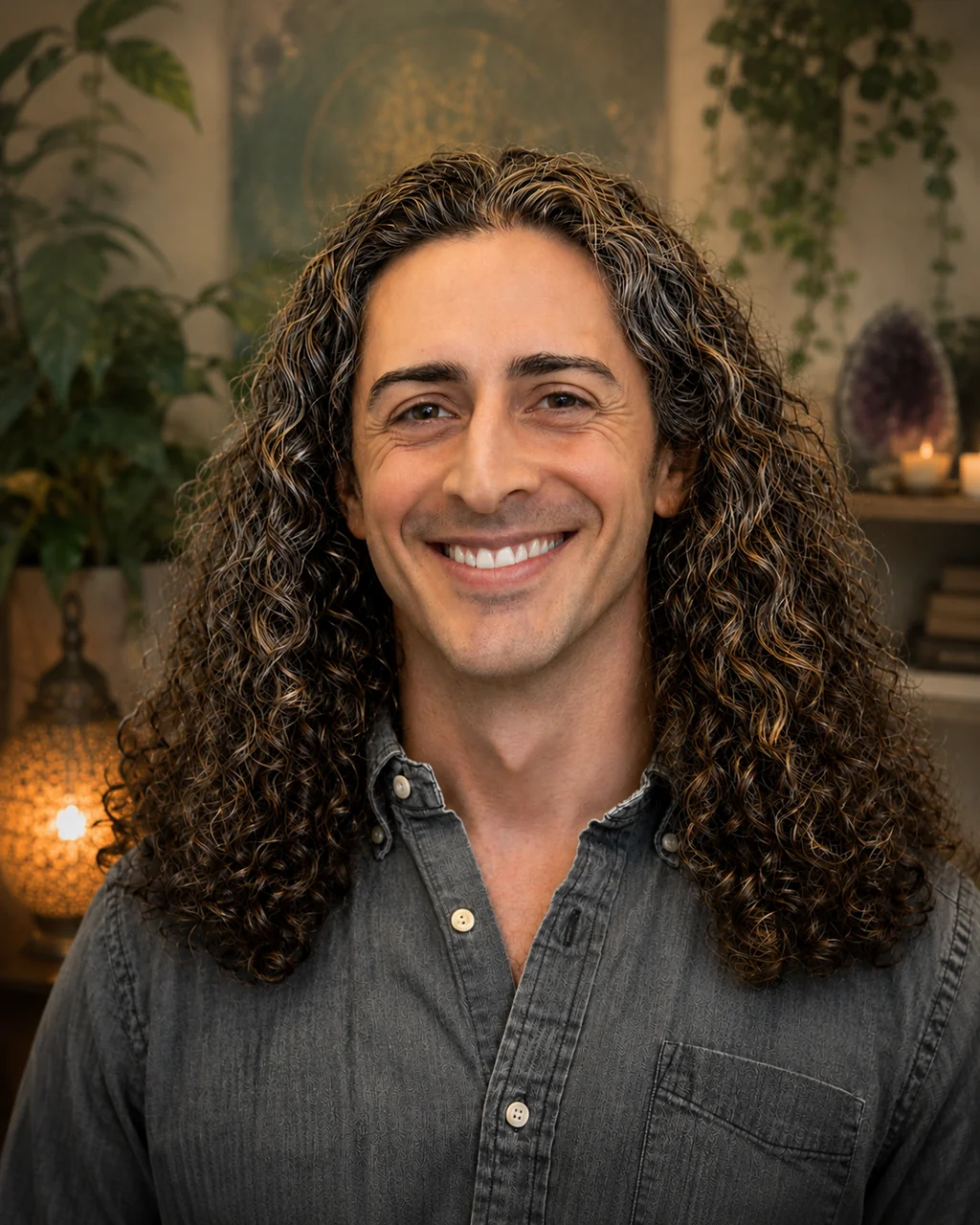
Cameron Eshgh, LMHC-D, NCC, offers clinical supervision, consultation, and mentorship for therapists and emerging clinicians seeking a grounded space to think deeply about complex trauma, relational process, spiritual integration, attachment patterns, and the development of their own clinical voice.
Supervision and consultation may be especially useful for clinicians interested in relational therapy, trauma-informed care, depth psychotherapy, complex trauma, spiritual integration, religious trauma, psychedelic integration, private practice development, and the movement from theory into lived clinical presence.
Many supervision experiences focus primarily on caseload review, documentation, and risk management.
Those elements matter. But they are not sufficient for the kind of clinical development that helps a therapist become steadier, more discerning, and more genuinely present with the people they work with.
Cameron's approach to supervision and consultation makes room for both: the practical and ethical foundations clinical work requires, and the deeper relational, developmental, and sometimes spiritual material that shapes how a therapist actually shows up in the room.
Cameron is a Licensed Mental Health Counselor and Certified Complex Trauma Professional whose clinical background includes relational therapy, trauma-informed care, complex trauma, anxiety, burnout, perfectionism, attachment wounds, relationship patterns, identity and meaning, substance use recovery, serious mental illness, psychosis, and co-occurring concerns.
Cameron's supervision and consultation are informed by his background as a Certified Complex Trauma Professional, with attention to complex trauma, relational process, attachment, dissociation, nervous-system responses, countertransference, spiritual material, and clinical containment.
Typically involves an evaluative or licensure-related relationship with a pre-licensed, limited-permit, or supervised clinician working toward independent licensure.
A collaborative relationship for already-licensed clinicians who want a thinking partner for complex cases, clinical development, or private practice, without an evaluative or licensure-counting component.
A longer-arc relationship focused on the development of your clinical identity, voice, and sustainability as a therapist, beyond any single case.
Supervision requirements vary by state, profession, and clinical setting. Cameron is licensed as a mental health counselor in New York, New Jersey, Florida, Massachusetts, and Vermont.
Whether board-qualifying supervision is available to you depends on your state's board rules, your supervisee license type, and your clinical setting. This is clarified individually during the inquiry process rather than assumed in advance. Clinical consultation and mentorship, which are not licensure-counting, are generally more flexible across state lines.
New York licensed mental health counselors now need a separate diagnostic privilege in order to diagnose and to develop assessment-based treatment plans. Cameron holds the New York diagnostic privilege as an LMHC-D, which places him within the category of professionals the New York State Education Department recognizes as qualified to supervise that experience.
If you are a New York LMHC working toward the privilege, whether through the 2,000-hour pathway or the attestation pathway that closes June 24, 2027, there is a dedicated page covering the requirements, the supervisor rules, the settings restriction, and how supervision with Cameron fits.
New York Diagnostic Privilege SupervisionIf you are considering supervision, consultation, or mentorship with Cameron, the next step is a brief inquiry to clarify your license status, state requirements, clinical setting, and what you are seeking.
Inquire About SupervisionYes. Cameron Eshgh, LMHC-D, NCC, offers clinical supervision, consultation, and mentorship for therapists and emerging clinicians, with particular depth in relational therapy, trauma, complex trauma, and spiritual integration.
Whether supervision counts toward licensure depends on your state's board requirements, your license type, your clinical setting, and Cameron's eligibility to provide board-qualifying supervision in your situation. This is clarified during the inquiry process, not assumed in advance.
Yes. Clinical consultation is available for fully licensed therapists who want a thinking partner for complex cases, relational process, trauma-informed care, spiritual integration, or private practice development, separate from licensure-counting supervision.
Clinical supervision typically involves an evaluative or licensure-related relationship with a pre-licensed or supervised clinician. Clinical consultation is a collaborative relationship for already-licensed clinicians seeking case support, without an evaluative or licensure-counting component.
Yes. Cameron offers supervision and consultation for clinicians working with spiritual integration, religious trauma, psychedelic integration as psychotherapy after an experience, shadow work, and related depth-oriented clinical material.
Clinician
NPI 1336731413.